
Karakterre Conversations: Moritz Herzog
There has been an overproduction of wine for a long time. … Many small farms will go out of business, whilst even larger ones will emerge. Their lobbying power must be curbed, otherwise we will strangle ourselves.
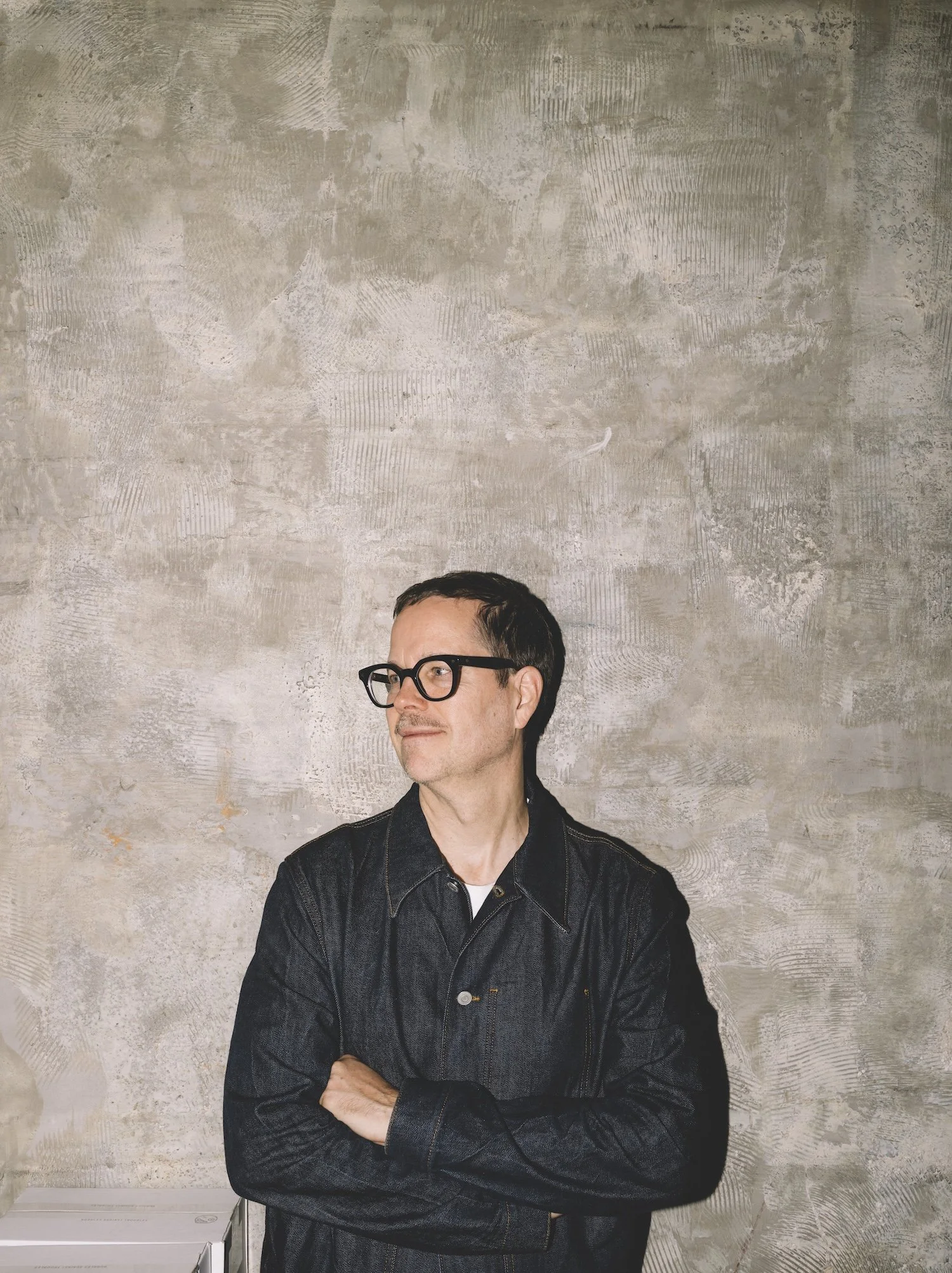
Today, we’re talking to Moritz Herzog, one of the first people to build a platform supporting the development of natural winegrowing in Central and Eastern Europe—his native Austria in particular.
Moritz is the founder of the Vienna-based wine import company Weinskandal. Founded two decades ago, Weinskandal challenged conventional notions of wine in Austria—and of Austrian wines themselves—at an early stage, alongside similar platforms emerging in Denmark and the UK.
Weinskandal’s latest project is R&Bar, still the only natural wine bottle shop and easy-going bistro in the city.
We’re talking to Moritz ahead of Weinskandal’s Naturwein im Reaktor tasting in Vienna on October 16th and 17th.
To start with, what would you like to call it: natural wine or low intervention? I obviously prefer one over the other :) What’s your preference and why?
The term “natural wine” has gotten a lot of bad publicity in the last couple of years, but I still hold to it dearly. First of all, natural wine is more than a category of beverage, but a movement, a Rebellion and the opportunity to make wine in general approachable and available for everybody. Second, I feel like low intervention was coined to jump on the bandwagon of natural wine, without sharing the commitment and the difficulties. The goal should still be to use and intervene, as little as possible, but as much as necessary – not just a little less than everybody else and often the commitment to “low intervention” feels like that.
Third, it is a term that is already widely used, particularly amongst consumers. Why go to all the trouble of introducing a new term now, rather than simply defining the old one more clearly, if it needs defining? The whole ‘low intervention’ concept constantly refers to natural wine anyway. I find this discussion pointless. It’s a good way for wine people to make themselves seem important, or perhaps to distract from the real issues of our time! It certainly doesn’t protect consumers from bad wines. Rather, it restricts openness in one’s approach once again, which I have always regarded as the greatest merit of the natural wine movement. Does it taste good, or doesn’t it? That’s the only thing that matters!
You’re one of Europe’s pioneering importers and distributors of natural wines. How did it all start for you?
It was all a coincidence. In the early 2000s, I was a sommelier at a famous restaurant with an enormous wine list. All the big names, lots of old vintages. I’d tasted pretty much every Bordeaux there was, particularly many wines produced before the Parker era – from 1945 to the 1990s. That refined my palate for artisanal wines. At first, I was naturally fascinated by these new blockbuster wines, but after a while they seemed to become increasingly formulaic. Whether from California, Bordeaux or Austria! But I had no idea why that was the case. At the same time, an opportunity arose to make wine in France – in Roussillon, to be precise. There I encountered people like Gerald Gauby, Tom Lubbe and Alain Castex. Their efforts to produce artisanal wines fascinated me. And those were still very technical wines. Compared to today. The movement was just beginning. Everyone would bring wines from young winemakers they’d met here and there: Patrick Meyer, Francois Ganevat, Thierry Puzelat, Julien Labet and whoever else there was. This spirit of new beginnings fascinated me. These were wines that moved me emotionally once again, just like the old Bordeauxs. And unlike those, I could actually afford these wines. At the same time, I came across young winemakers in Austria who were also breaking new ground. Claus Preisinger and Judith Beck were particularly important to me. But also, Roland Velich, Franz Strohmeier and, of course, Ewald Tscheppe.
We didn’t know what we were doing; we just weren’t happy with the kind of invasive ‘winemaking’ that was all the rage back then. You couldn’t make a drop of red wine without a bit of gum arabic! We were all searching for something. Back then, there was no Instagram and no online shops. We helped each other out. Word of mouth. And I somehow ended up becoming their platform. At least for some of them ;-)
For me, it was never about the business side of things; it was a fascinating exploration of culture and the people who create it.
Austria now compared to two decades ago?
It’s incredible how positively Austria has developed. The number of exciting, sustainable winegrowers is enormous – not to say that we’re among the world’s best in terms of the number of producers. What I find I miss a little these days is that pioneering spirit. Yet we need it, given the challenges facing winegrowers and the wine trade today. We won’t get very far sticking to the old ways. I’d like to see more creativity again. The term ‘low intervention’ captures this perfectly. It’s no longer about ‘great’ wine; it’s about ‘good’ wine. About commerce. I find that a shame, because the difference isn’t just a little bit. It’s enormous. That’s why I’ve been doing this job for 20 years. That’s my mission. Anyone can understand this if they compare wine straight from the barrel with wine that’s been bottled. It could be the very same wine! Everything in between is intervention!
The scene has obviously changed tremendously in the last 20 years. Did anyone “win”? Did anyone “lose”? What’s the “result”?
That is a very difficult question. The consumer has definitely come out on top. Today, there is an unprecedented variety of wine styles available to everyone, across every price range. The original aim of the natural wine movement – the ‘vini democratici’, or making wholesome wines available to all – has been achieved but is now under threat due to a lack of foresight. We live in a schizophrenic world. On the one hand, we have the largest proportion of organically farmed land since the 1960s, when the whole industrial magic began; on the other hand, more Roundup has been sold worldwide today than ever before!
“We” have had a pretty nice decade up until a few years back. The consumption grew and so did production. New regions were discovered and old ones were re-discovered. Generally speaking, the sentiment is looking very much the opposite right now: there is less consumption and drinkers are again more region conservative. Is there no middle ground here?
It’s no secret, that the wine world is struggling right now. But, generally speaking, “we” are still on the better side of the crisis. Quality and proper farming will persevere! I have no doubt about that.
I feel like this new wave of conservatism is created inside the industry. The conscious move towards individuality is being reversed in order to be more marketable! I’m not sure whether this doesn’t destroy much of what we’ve built up over the last twenty years. The industry is trying to convince itself that people are returning to more traditional drinking habits, but I’m convinced that this trend stems from within our own ranks. It’s been fuelled by panic within the wine industry – a self-reinforcing cycle between production, retail and the hospitality sector. Because when we look at the figures of our sales our customers remain incredibly keen to experiment and open-minded.
Possibly there is just too much wine in the world?
Yes! Too much wine, from poorly farmed vineyards. Too many pesticides and herbicides poisoning our soils. Too much irrigation, draining our water supply. This discussion got a lot of focus in the last years but has been showing since the start of the century. There has been an overproduction of wine for a long time.
Many small farms will go out of business, whilst even larger ones will emerge. Their lobbying power must be curbed, otherwise we will strangle ourselves. However, this momentous upheaval we are currently experiencing also gives us another chance for utopian ideals. These fallow lands can be used to realize the idea of the commons. Local projects for communal food production and solar energy installations could teach us once again how to act in solidarity with one another. It would make us more independent. We could turn losers into winners.
What do you as a leading company need to do to adapt to these challenges? What are your priorities?
Communication, education and transparency are our most valued goods. All of us working in the industry take so many things for granted as so much knowledge as ubiquitous, that we sometimes forget you can have fun drinking wine without knowing the Bordeaux classification of 1855 or two hundred different grape varieties and their super specific origins. In the past the natural wine movement was a way of drinking wine without that pretentious habitus of needing an absurd amount of knowledge to enjoy it, but I feel like history is on the verge of catching up with us. Keep educating your customers! But don’t stray away from “stupid” questions.
Give us your top 3 wines of the moment, please.
Jean-François Ginglinger - Riesling Lerchenberg
Alsace has become quite an important pillar of the Weinskandal portfolio in the last couple of years. Here in Austria, the region is still flying under the radar. You can find a lot of pioneers and very important voices for the industry in this northeastern part of France as well as an amazing quality of wines!
Sepp & Maria Muster - Erde
Of course, we had to add something Austrian to this list. Sepp & Marias Muster Erde is one of the great orange wines of the world. Something, that should be on every bucket list.
Matassa – Cuvée Romanissa
Matassa is directly linked to the founding of Weinskandal. It was the first pallet we ever imported. Tom Lubbe had and still has a great influence on winemaking all over Europe. A lot of younger winemakers we import and distribute have worked with him in the past. Furthermore, his work in Roussillon, one of the driest regions in Europe, is exemplary and groundbreaking for generations to come, that have to work under more and more extreme influences of global warming.
Thanks, Moritz!